Nobel Kimya Ödülü Sahipleri Listesi
Son güncelleme: 8 Ekim 2026. Bu liste, Nobel Vakfı’nın resmî veri kaynağından (NobelPrize.org API) derlenmiş ve 2026 ödülünü de içerecek biçimde güncellenmiştir.
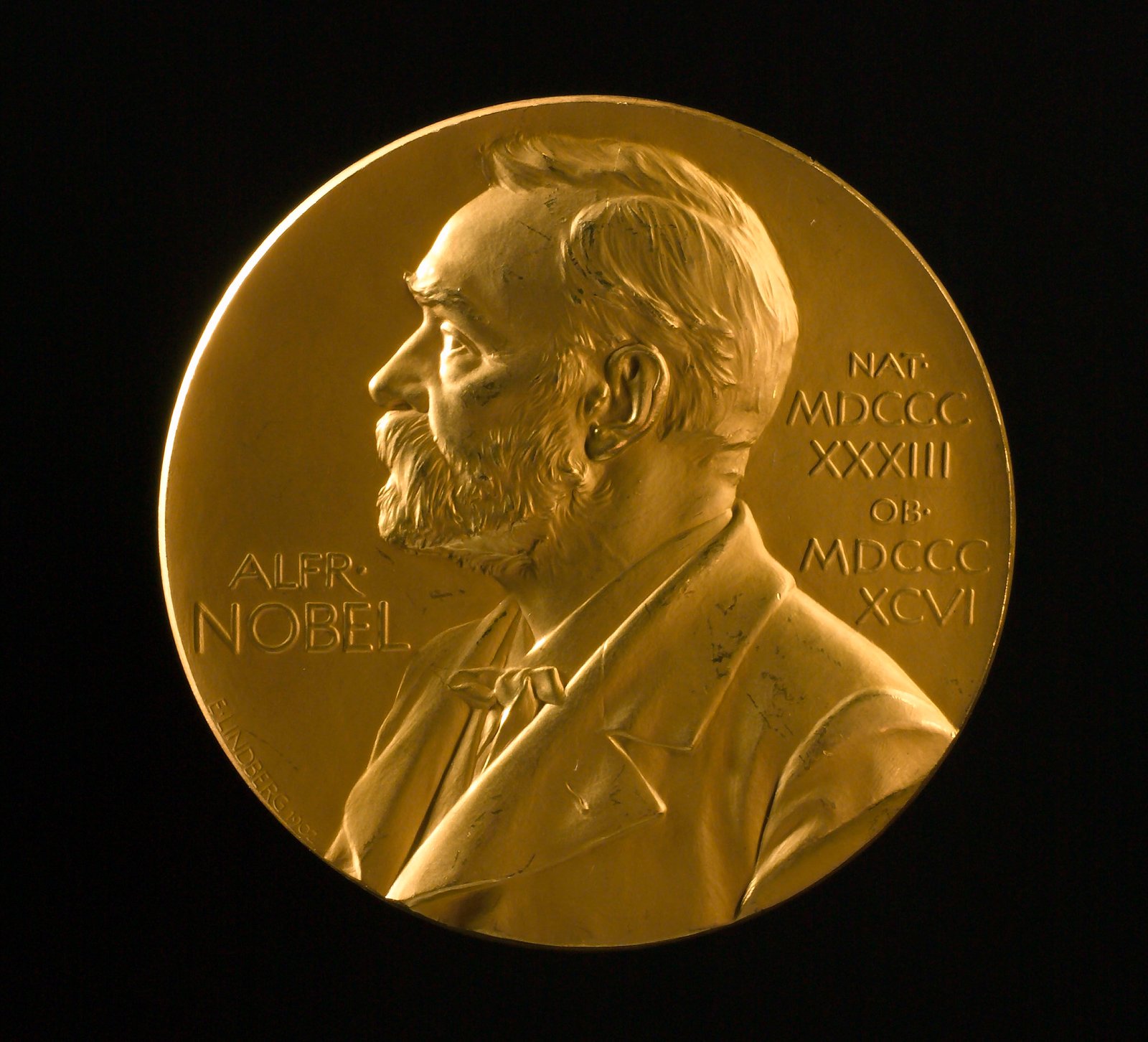
Nobel Kimya Ödülü, Alfred Nobel’in vasiyetindeki beş ödülden biridir ve ilk kez 1901’de verildi. Ödül sahibini İsveç Kraliyet Bilimler Akademisi belirler; ödüller her yıl 10 Aralık’ta Stockholm’de takdim edilir. İlk kimya ödülü, kimyasal dinamik ve çözeltilerin ozmotik basıncı üzerine çalışan Jacobus H. van ‘t Hoff’a verildi.
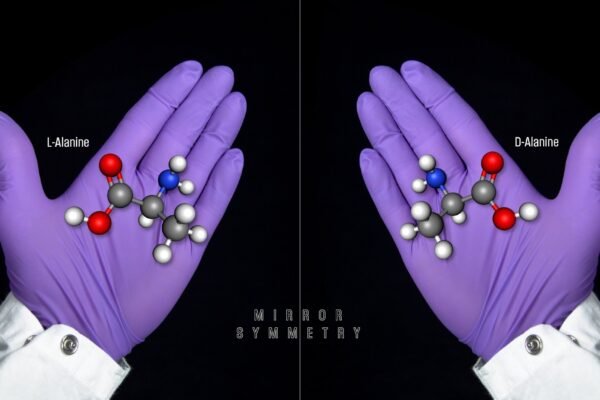
Listenin en yeni satırı 7 Ekim 2026 ödülü: Henri B. Kagan ve Kenso Soai’nin moleküllerin “elliliğini” (kiralite) seçen tepkimelerdeki çalışmaları (ayrıntılı yazımız).
Aşağıda her ödül için resmî gerekçeyi, ödül sahiplerinin doğum ülkesini ve ödül sırasındaki kurumlarını bulacaksınız. Kimya ödülü zaman zaman fizik ve biyolojiyle de kesişir; örneğin yapısal biyoloji, malzeme ve enerji depolama çalışmaları bu listede sık görülür.
Rakamlarla Nobel Kimya Ödülü
- 118 kez ödül verildi (1901–2026); toplam 202 ödül sahibi var.
- Ödül verilmeyen yıllar: 1916, 1917, 1919, 1924, 1933, 1940, 1941, 1942. 1916, 1917 ve 1940–1942 yılları iki dünya savaşının dönemine denk gelir.
- Ödüllerin 63‘i tek kişiye, 26‘si iki kişiye, 29‘ü üç kişiye verildi; Nobel kuralları bir ödülün en fazla üç kişi arasında paylaşılmasına izin verir.
- Kadın ödül sahibi sayısı 8: Marie Curie (1911), Irène Joliot-Curie (1935), Dorothy Crowfoot Hodgkin (1964), Ada E. Yonath (2009), Frances H. Arnold (2018), Emmanuelle Charpentier (2020), Jennifer A. Doudna (2020), Carolyn Bertozzi (2022).
- Ödül anında en genç sahibi: Frédéric Joliot (1935, yaklaşık 35 yaşında); en yaşlısı: John B. Goodenough (2019, yaklaşık 97 yaşında).
- Ödül tutarı: 1901’de 150.782 İsveç kronuydu (bugünün parasıyla yaklaşık 10.892.857 kron); 2026’da 12 milyon kron.
- Kimya ödülünü iki kez kazananlar: Frederick Sanger (1958, insülinin yapısı; 1980, DNA dizileme yöntemi) ve K. Barry Sharpless (2001 ve 2022).
- Marie Curie 1911’de kimya ödülünü alarak iki farklı bilim dalında Nobel kazanan ilk kişi oldu (1903’te fizik ödülünü de almıştı).
- Türkiye doğumlu ödül sahibi: Aziz Sancar (2015, DNA onarımının hücresel mekanizmaları; Tomas Lindahl ve Paul Modrich ile birlikte). Sancar, Mardin’in Savur ilçesinde doğdu.
Hangi ülkeler öne çıkıyor?
Aşağıdaki tabloda her ödül sahibi, ödülü aldığı sırada çalıştığı kurumun bugünkü ülkesine göre sayılmıştır (kurum bilgisi yoksa doğum ülkesi esas alınmıştır). Birden fazla ülkede çalışmış kişiler yalnızca ödüle esas kurumun ülkesine yazılır; bu nedenle toplam, ödül sahibi sayısına eşittir.
| Sıra | Ülke | Ödül sahibi sayısı |
|---|---|---|
| 1 | ABD | 88 |
| 2 | Almanya | 33 |
| 3 | Birleşik Krallık | 31 |
| 4 | Fransa | 11 |
| 5 | Japonya | 8 |
| 6 | İsviçre | 7 |
| 7 | İsveç | 5 |
| 8 | İsrail | 4 |
| 9 | Kanada | 3 |
| 10 | Danimarka | 2 |
| 11 | Avusturya | 1 |
| 12 | Finlandiya | 1 |
Yıllara göre tam liste
Her satırda ödül yılı, ödül sahibi (varsa pay oranıyla), doğum yeri ülkesi (bugünkü sınırlara göre), ödül sırasındaki kurumu ve Nobel Komitesi’nin resmî gerekçesi yer alır. Gerekçeler Komite’nin İngilizce metnidir; yıl bağlantıları Nobel Vakfı’nın ilgili ödül sayfasına gider.
1901–1910
| Yıl | Ödül sahibi | Doğum ülkesi | Kurum | Resmî gerekçe (İngilizce) |
|---|---|---|---|---|
| 1901 | Jacobus H. van ‘t Hoff 1852–1911 | Hollanda | Berlin University | in recognition of the extraordinary services he has rendered by the discovery of the laws of chemical dynamics and osmotic pressure in solutions |
| 1902 | Emil Fischer 1852–1919 | Almanya | Berlin University | in recognition of the extraordinary services he has rendered by his work on sugar and purine syntheses |
| 1903 | Svante Arrhenius 1859–1927 | İsveç | Stockholm University | in recognition of the extraordinary services he has rendered to the advancement of chemistry by his electrolytic theory of dissociation |
| 1904 | Sir William Ramsay 1852–1916 | İskoçya | University College | in recognition of his services in the discovery of the inert gaseous elements in air, and his determination of their place in the periodic system |
| 1905 | Adolf von Baeyer 1835–1917 | Almanya | Munich University | in recognition of his services in the advancement of organic chemistry and the chemical industry, through his work on organic dyes and hydroaromatic compounds |
| 1906 | Henri Moissan 1852–1907 | Fransa | Sorbonne University | in recognition of the great services rendered by him in his investigation and isolation of the element fluorine, and for the adoption in the service of science of the electric furnace called after him |
| 1907 | Eduard Buchner 1860–1917 | Almanya | Landwirtschaftliche Hochschule (Agricultural College) | for his biochemical researches and his discovery of cell-free fermentation |
| 1908 | Ernest Rutherford 1871–1937 | Yeni Zelanda | Victoria University | for his investigations into the disintegration of the elements, and the chemistry of radioactive substances |
| 1909 | Wilhelm Ostwald 1853–1932 | Letonya | Leipzig University | in recognition of his work on catalysis and for his investigations into the fundamental principles governing chemical equilibria and rates of reaction |
| 1910 | Otto Wallach 1847–1931 | Rusya | Goettingen University | in recognition of his services to organic chemistry and the chemical industry by his pioneer work in the field of alicyclic compounds |
1911–1920
| Yıl | Ödül sahibi | Doğum ülkesi | Kurum | Resmî gerekçe (İngilizce) |
|---|---|---|---|---|
| 1911 | Marie Curie 1867–1934 | Polonya | Sorbonne University | in recognition of her services to the advancement of chemistry by the discovery of the elements radium and polonium, by the isolation of radium and the study of the nature and compounds of this remarkable element |
| 1912 | Victor Grignard (½) 1871–1935 Paul Sabatier (½) 1854–1941 | Fransa Fransa | Nancy University Toulouse University | for the discovery of the so-called Grignard reagent, which in recent years has greatly advanced the progress of organic chemistry for his method of hydrogenating organic compounds in the presence of finely disintegrated metals whereby the progress of organic chemistry has been greatly advanced in recent years |
| 1913 | Alfred Werner 1866–1919 | Fransa | University of Zurich | in recognition of his work on the linkage of atoms in molecules by which he has thrown new light on earlier investigations and opened up new fields of research especially in inorganic chemistry |
| 1914 | Theodore W. Richards 1868–1928 | ABD | Harvard University | in recognition of his accurate determinations of the atomic weight of a large number of chemical elements |
| 1915 | Richard Willstätter 1872–1942 | Almanya | Kaiser-Wilhelm-Institut (now Max-Planck Institut) für Chemie | for his researches on plant pigments, especially chlorophyll |
| 1916 | Ödül verilmedi | — | — | — |
| 1917 | Ödül verilmedi | — | — | — |
| 1918 | Fritz Haber 1868–1934 | Polonya | Kaiser-Wilhelm-Institut (now Fritz-Haber-Institut) für physikalische Chemie und Electrochemie | for the synthesis of ammonia from its elements |
| 1919 | Ödül verilmedi | — | — | — |
| 1920 | Walther Nernst 1864–1941 | Polonya | Berlin University | in recognition of his work in thermochemistry |
1921–1930
| Yıl | Ödül sahibi | Doğum ülkesi | Kurum | Resmî gerekçe (İngilizce) |
|---|---|---|---|---|
| 1921 | Frederick Soddy 1877–1956 | Birleşik Krallık | University of Oxford | for his contributions to our knowledge of the chemistry of radioactive substances, and his investigations into the origin and nature of isotopes |
| 1922 | Francis W. Aston 1877–1945 | Birleşik Krallık | University of Cambridge | for his discovery, by means of his mass spectrograph, of isotopes, in a large number of non-radioactive elements, and for his enunciation of the whole-number rule |
| 1923 | Fritz Pregl 1869–1930 | Slovenya | Graz University | for his invention of the method of micro-analysis of organic substances |
| 1924 | Ödül verilmedi | — | — | — |
| 1925 | Richard Zsigmondy 1865–1929 | Avusturya | Goettingen University | for his demonstration of the heterogenous nature of colloid solutions and for the methods he used, which have since become fundamental in modern colloid chemistry |
| 1926 | The Svedberg 1884–1971 | İsveç | Uppsala University | for his work on disperse systems |
| 1927 | Heinrich Wieland 1877–1957 | Almanya | Munich University | for his investigations of the constitution of the bile acids and related substances |
| 1928 | Adolf Windaus 1876–1959 | Almanya | Goettingen University | for the services rendered through his research into the constitution of the sterols and their connection with the vitamins |
| 1929 | Arthur Harden (½) 1865–1940 Hans von Euler-Chelpin (½) 1873–1964 | Birleşik Krallık Almanya | London University Stockholm University | for their investigations on the fermentation of sugar and fermentative enzymes |
| 1930 | Hans Fischer 1881–1945 | Almanya | Technische Hochschule (Institute of Technology) | for his researches into the constitution of haemin and chlorophyll and especially for his synthesis of haemin |
1931–1940
| Yıl | Ödül sahibi | Doğum ülkesi | Kurum | Resmî gerekçe (İngilizce) |
|---|---|---|---|---|
| 1931 | Carl Bosch (½) 1874–1940 Friedrich Bergius (½) 1884–1949 | Almanya Polonya | University of Heidelberg University of Heidelberg | in recognition of their contributions to the invention and development of chemical high pressure methods |
| 1932 | Irving Langmuir 1881–1957 | ABD | General Electric Company | for his discoveries and investigations in surface chemistry |
| 1933 | Ödül verilmedi | — | — | — |
| 1934 | Harold C. Urey 1893–1981 | ABD | Columbia University | for his discovery of heavy hydrogen |
| 1935 | Frédéric Joliot (½) 1900–1958 Irène Joliot-Curie (½) 1897–1956 | Fransa Fransa | Institut du Radium Institut du Radium | in recognition of their synthesis of new radioactive elements |
| 1936 | Peter Debye 1884–1966 | Hollanda | Berlin University | for his contributions to our knowledge of molecular structure through his investigations on dipole moments and on the diffraction of X-rays and electrons in gases |
| 1937 | Norman Haworth (½) 1883–1950 Paul Karrer (½) 1889–1971 | Birleşik Krallık Rusya | Birmingham University University of Zurich | for his investigations on carbohydrates and vitamin C for his investigations on carotenoids, flavins and vitamins A and B2 |
| 1938 | Richard Kuhn 1900–1967 | Avusturya | Kaiser-Wilhelm-Institut (now Max-Planck Institut) für Medizinische Forschung | for his work on carotenoids and vitamins |
| 1939 | Adolf Butenandt (½) 1903–1995 Leopold Ruzicka (½) 1887–1976 | Almanya Hırvatistan | Kaiser-Wilhelm-Institut (now Max-Planck-Institut) für Biochemie Eidgenössische Technische Hochschule (Swiss Federal Institute of Technology) | for his work on sex hormones for his work on polymethylenes and higher terpenes |
| 1940 | Ödül verilmedi | — | — | — |
1941–1950
| Yıl | Ödül sahibi | Doğum ülkesi | Kurum | Resmî gerekçe (İngilizce) |
|---|---|---|---|---|
| 1941 | Ödül verilmedi | — | — | — |
| 1942 | Ödül verilmedi | — | — | — |
| 1943 | George de Hevesy 1885–1966 | Macaristan | Stockholm University | for his work on the use of isotopes as tracers in the study of chemical processes |
| 1944 | Otto Hahn 1879–1968 | Almanya | Kaiser-Wilhelm-Institut (now Max-Planck Institut) für Chemie | for his discovery of the fission of heavy nuclei |
| 1945 | Artturi Virtanen 1895–1973 | Finlandiya | University of Helsinki | for his research and inventions in agricultural and nutrition chemistry, especially for his fodder preservation method |
| 1946 | James B. Sumner (½) 1887–1955 John H. Northrop (¼) 1891–1987 Wendell M. Stanley (¼) 1904–1971 | ABD ABD ABD | Cornell University Rockefeller Institute for Medical Research Rockefeller Institute for Medical Research | for his discovery that enzymes can be crystallized for their preparation of enzymes and virus proteins in a pure form |
| 1947 | Sir Robert Robinson 1886–1975 | Birleşik Krallık | University of Oxford | for his investigations on plant products of biological importance, especially the alkaloids |
| 1948 | Arne Tiselius 1902–1971 | İsveç | Uppsala University | for his research on electrophoresis and adsorption analysis, especially for his discoveries concerning the complex nature of the serum proteins |
| 1949 | William F. Giauque 1895–1982 | Kanada | University of California | for his contributions in the field of chemical thermodynamics, particularly concerning the behaviour of substances at extremely low temperatures |
| 1950 | Otto Diels (½) 1876–1954 Kurt Alder (½) 1902–1958 | Almanya Polonya | Kiel University Cologne University | for their discovery and development of the diene synthesis |
1951–1960
| Yıl | Ödül sahibi | Doğum ülkesi | Kurum | Resmî gerekçe (İngilizce) |
|---|---|---|---|---|
| 1951 | Edwin M. McMillan (½) 1907–1991 Glenn T. Seaborg (½) 1912–1999 | ABD ABD | University of California University of California | for their discoveries in the chemistry of the transuranium elements |
| 1952 | Archer J.P. Martin (½) 1910–2002 Richard L.M. Synge (½) 1914–1994 | Birleşik Krallık Birleşik Krallık | National Institute for Medical Research Rowett Research Institute | for their invention of partition chromatography |
| 1953 | Hermann Staudinger 1881–1965 | Almanya | University of Freiburg | for his discoveries in the field of macromolecular chemistry |
| 1954 | Linus Pauling 1901–1994 | ABD | California Institute of Technology (Caltech) | for his research into the nature of the chemical bond and its application to the elucidation of the structure of complex substances |
| 1955 | Vincent du Vigneaud 1901–1978 | ABD | Cornell University | for his work on biochemically important sulphur compounds, especially for the first synthesis of a polypeptide hormone |
| 1956 | Sir Cyril Hinshelwood (½) 1897–1967 Nikolay Semenov (½) 1896–1986 | Birleşik Krallık Rusya | University of Oxford Institute for Chemical Physics of the Academy of Sciences of the USSR | for their researches into the mechanism of chemical reactions |
| 1957 | Lord Todd 1907–1997 | İskoçya | University of Cambridge | for his work on nucleotides and nucleotide co-enzymes |
| 1958 | Frederick Sanger 1918–2013 | Birleşik Krallık | University of Cambridge | for his work on the structure of proteins, especially that of insulin |
| 1959 | Jaroslav Heyrovsky 1890–1967 | Çekya | Polarographic Institute of the Czechoslovak Academy of Science | for his discovery and development of the polarographic methods of analysis |
| 1960 | Willard F. Libby 1908–1980 | ABD | University of California | for his method to use carbon-14 for age determination in archaeology, geology, geophysics, and other branches of science |
1961–1970
| Yıl | Ödül sahibi | Doğum ülkesi | Kurum | Resmî gerekçe (İngilizce) |
|---|---|---|---|---|
| 1961 | Melvin Calvin 1911–1997 | ABD | University of California | for his research on the carbon dioxide assimilation in plants |
| 1962 | Max F. Perutz (½) 1914–2002 John C. Kendrew (½) 1917–1997 | Avusturya Birleşik Krallık | MRC Laboratory of Molecular Biology MRC Laboratory of Molecular Biology | for their studies of the structures of globular proteins |
| 1963 | Karl Ziegler (½) 1898–1973 Giulio Natta (½) 1903–1979 | Almanya İtalya | Max-Planck-Institut für Kohlenforschung Institute of Technology | for their discoveries in the field of the chemistry and technology of high polymers |
| 1964 | Dorothy Crowfoot Hodgkin 1910–1994 | Mısır | University of Oxford, Royal Society | for her determinations by X-ray techniques of the structures of important biochemical substances |
| 1965 | Robert B. Woodward 1917–1979 | ABD | Harvard University | for his outstanding achievements in the art of organic synthesis |
| 1966 | Robert S. Mulliken 1896–1986 | ABD | University of Chicago | for his fundamental work concerning chemical bonds and the electronic structure of molecules by the molecular orbital method |
| 1967 | Manfred Eigen (½) 1927–2019 Ronald G.W. Norrish (¼) 1897–1978 George Porter (¼) 1920–2002 | Almanya Birleşik Krallık Birleşik Krallık | Max-Planck-Institut für Physikalische Chemie Institute of Physical Chemistry Royal Institution of Great Britain | for their studies of extremely fast chemical reactions, effected by disturbing the equilibrium by means of very short pulses of energy |
| 1968 | Lars Onsager 1903–1976 | Norveç | Yale University | for the discovery of the reciprocal relations bearing his name, which are fundamental for the thermodynamics of irreversible processes |
| 1969 | Derek Barton (½) 1918–1998 Odd Hassel (½) 1897–1981 | Birleşik Krallık Norveç | Imperial College University of Oslo | for their contributions to the development of the concept of conformation and its application in chemistry |
| 1970 | Luis Leloir 1906–1987 | Fransa | Institute for Biochemical Research | for his discovery of sugar nucleotides and their role in the biosynthesis of carbohydrates |
1971–1980
| Yıl | Ödül sahibi | Doğum ülkesi | Kurum | Resmî gerekçe (İngilizce) |
|---|---|---|---|---|
| 1971 | Gerhard Herzberg 1904–1999 | Almanya | National Research Council of Canada | for his contributions to the knowledge of electronic structure and geometry of molecules, particularly free radicals |
| 1972 | Christian Anfinsen (½) 1916–1995 Stanford Moore (¼) 1913–1982 William H. Stein (¼) 1911–1980 | ABD ABD ABD | National Institutes of Health Rockefeller University Rockefeller University | for his work on ribonuclease, especially concerning the connection between the amino acid sequence and the biologically active conformation for their contribution to the understanding of the connection between chemical structure and catalytic activity of the active centre of the ribonuclease molecule |
| 1973 | Ernst Otto Fischer (½) 1918–2007 Geoffrey Wilkinson (½) 1921–1996 | Almanya Birleşik Krallık | Technical University Imperial College | for their pioneering work, performed independently, on the chemistry of the organometallic, so called sandwich compounds |
| 1974 | Paul J. Flory 1910–1985 | ABD | Stanford University | for his fundamental achievements, both theoretical and experimental, in the physical chemistry of the macromolecules |
| 1975 | John Cornforth (½) 1917–2013 Vladimir Prelog (½) 1906–1998 | Avustralya Bosna-Hersek | University of Sussex Eidgenössische Technische Hochschule (Swiss Federal Institute of Technology) | for his work on the stereochemistry of enzyme-catalyzed reactions for his research into the stereochemistry of organic molecules and reactions |
| 1976 | William Lipscomb 1919–2011 | ABD | Harvard University | for his studies on the structure of boranes illuminating problems of chemical bonding |
| 1977 | Ilya Prigogine 1917–2003 | Rusya | Université Libre de Bruxelles | for his contributions to non-equilibrium thermodynamics, particularly the theory of dissipative structures |
| 1978 | Peter Mitchell 1920–1992 | Birleşik Krallık | Glynn Research Laboratories | for his contribution to the understanding of biological energy transfer through the formulation of the chemiosmotic theory |
| 1979 | Herbert C. Brown (½) 1912–2004 Georg Wittig (½) 1897–1987 | Birleşik Krallık Almanya | Purdue University University of Heidelberg | for their development of the use of boron- and phosphorus-containing compounds, respectively, into important reagents in organic synthesis |
| 1980 | Paul Berg (½) 1926–2023 Walter Gilbert (¼) d. 1932 Frederick Sanger (¼) 1918–2013 | ABD ABD Birleşik Krallık | Stanford University Harvard University, Biological Laboratories MRC Laboratory of Molecular Biology | for his fundamental studies of the biochemistry of nucleic acids, with particular regard to recombinant-DNA for their contributions concerning the determination of base sequences in nucleic acids |
1981–1990
| Yıl | Ödül sahibi | Doğum ülkesi | Kurum | Resmî gerekçe (İngilizce) |
|---|---|---|---|---|
| 1981 | Kenichi Fukui (½) 1918–1998 Roald Hoffmann (½) d. 1937 | Japonya Ukrayna | Kyoto University Cornell University | for their theories, developed independently, concerning the course of chemical reactions |
| 1982 | Aaron Klug 1926–2018 | Litvanya | MRC Laboratory of Molecular Biology | for his development of crystallographic electron microscopy and his structural elucidation of biologically important nucleic acid-protein complexes |
| 1983 | Henry Taube 1915–2005 | Kanada | Stanford University | for his work on the mechanisms of electron transfer reactions, especially in metal complexes |
| 1984 | Bruce Merrifield 1921–2006 | ABD | Rockefeller University | for his development of methodology for chemical synthesis on a solid matrix |
| 1985 | Herbert A. Hauptman (½) 1917–2011 Jerome Karle (½) 1918–2013 | ABD ABD | The Medical Foundation of Buffalo US Naval Research Laboratory | for their outstanding achievements in the development of direct methods for the determination of crystal structures |
| 1986 | Dudley R. Herschbach (⅓) d. 1932 Yuan T. Lee (⅓) d. 1936 John C. Polanyi (⅓) d. 1929 | ABD Tayvan Almanya | Harvard University University of California University of Toronto | for their contributions concerning the dynamics of chemical elementary processes |
| 1987 | Donald J. Cram (⅓) 1919–2001 Jean-Marie Lehn (⅓) d. 1939 Charles J. Pedersen (⅓) 1904–1989 | ABD Fransa Güney Kore | University of California Université Louis Pasteur Du Pont | for their development and use of molecules with structure-specific interactions of high selectivity |
| 1988 | Johann Deisenhofer (⅓) d. 1943 Robert Huber (⅓) d. 1937 Hartmut Michel (⅓) d. 1948 | Almanya Almanya Almanya | University of Texas Southwestern Medical Center at Dallas Max-Planck-Institut für Biochemie Max-Planck-Institut für Biophysik | for the determination of the three-dimensional structure of a photosynthetic reaction centre |
| 1989 | Sidney Altman (½) 1939–2022 Thomas R. Cech (½) d. 1947 | Kanada ABD | Yale University University of Colorado | for their discovery of catalytic properties of RNA |
| 1990 | Elias James Corey d. 1928 | ABD | Harvard University | for his development of the theory and methodology of organic synthesis |
1991–2000
| Yıl | Ödül sahibi | Doğum ülkesi | Kurum | Resmî gerekçe (İngilizce) |
|---|---|---|---|---|
| 1991 | Richard R. Ernst 1933–2021 | İsviçre | Eidgenössische Technische Hochschule (Swiss Federal Institute of Technology) | for his contributions to the development of the methodology of high resolution nuclear magnetic resonance (NMR) spectroscopy |
| 1992 | Rudolph A. Marcus 1923–2026 | Kanada | California Institute of Technology (Caltech) | for his contributions to the theory of electron transfer reactions in chemical systems |
| 1993 | Kary B. Mullis (½) 1944–2019 Michael Smith (½) 1932–2000 | ABD Birleşik Krallık | — University of British Columbia | for his invention of the polymerase chain reaction (PCR) method for his fundamental contributions to the establishment of oligonucleotide-based, site-directed mutagenesis and its development for protein studies |
| 1994 | George A. Olah 1927–2017 | Macaristan | University of Southern California | for his contribution to carbocation chemistry |
| 1995 | Paul J. Crutzen (⅓) 1933–2021 Mario J. Molina (⅓) 1943–2020 F. Sherwood Rowland (⅓) 1927–2012 | Hollanda Meksika ABD | Max-Planck-Institut für Chemie Massachusetts Institute of Technology (MIT) University of California | for their work in atmospheric chemistry, particularly concerning the formation and decomposition of ozone |
| 1996 | Robert F. Curl Jr. (⅓) 1933–2022 Sir Harold Kroto (⅓) 1939–2016 Richard E. Smalley (⅓) 1943–2005 | ABD Birleşik Krallık ABD | Rice University University of Sussex Rice University | for their discovery of fullerenes |
| 1997 | Paul D. Boyer (¼) 1918–2018 John E. Walker (¼) d. 1941 Jens C. Skou (½) 1918–2018 | ABD Birleşik Krallık Danimarka | University of California MRC Laboratory of Molecular Biology Aarhus University | for their elucidation of the enzymatic mechanism underlying the synthesis of adenosine triphosphate (ATP) for the first discovery of an ion-transporting enzyme, Na+, K+ -ATPase |
| 1998 | Walter Kohn (½) 1923–2016 John Pople (½) 1925–2004 | Avusturya Birleşik Krallık | University of California Northwestern University | for his development of the density-functional theory for his development of computational methods in quantum chemistry |
| 1999 | Ahmed Zewail 1946–2016 | Mısır | California Institute of Technology (Caltech) | for his studies of the transition states of chemical reactions using femtosecond spectroscopy |
| 2000 | Alan Heeger (⅓) d. 1936 Alan MacDiarmid (⅓) 1927–2007 Hideki Shirakawa (⅓) 1936–2026 | ABD Yeni Zelanda Japonya | University of California University of Pennsylvania University of Tsukuba | for the discovery and development of conductive polymers |
2001–2010
| Yıl | Ödül sahibi | Doğum ülkesi | Kurum | Resmî gerekçe (İngilizce) |
|---|---|---|---|---|
| 2001 | William Knowles (¼) 1917–2012 Ryoji Noyori (¼) d. 1938 K. Barry Sharpless (½) d. 1941 | ABD Japonya ABD | — Nagoya University The Scripps Research Institute | for their work on chirally catalysed hydrogenation reactions for his work on chirally catalysed oxidation reactions |
| 2002 | John B. Fenn (¼) 1917–2010 Koichi Tanaka (¼) d. 1959 Kurt Wüthrich (½) d. 1938 | ABD Japonya İsviçre | Virginia Commonwealth University Shimadzu Corp. Eidgenössische Technische Hochschule (Swiss Federal Institute of Technology) | for their development of soft desorption ionisation methods for mass spectrometric analyses of biological macromolecules for his development of nuclear magnetic resonance spectroscopy for determining the three-dimensional structure of biological macromolecules in solution |
| 2003 | Peter Agre (½) d. 1949 Roderick MacKinnon (½) d. 1956 | ABD ABD | Johns Hopkins University School of Medicine Rockefeller University | for the discovery of water channels for structural and mechanistic studies of ion channels |
| 2004 | Aaron Ciechanover (⅓) d. 1947 Avram Hershko (⅓) d. 1937 Irwin Rose (⅓) 1926–2015 | İsrail Macaristan ABD | Technion – Israel Institute of Technology Technion – Israel Institute of Technology University of California | for the discovery of ubiquitin-mediated protein degradation |
| 2005 | Yves Chauvin (⅓) 1930–2015 Robert H. Grubbs (⅓) 1942–2021 Richard R. Schrock (⅓) d. 1945 | Belçika ABD ABD | Institut Français du Pétrole California Institute of Technology (Caltech) Massachusetts Institute of Technology (MIT) | for the development of the metathesis method in organic synthesis |
| 2006 | Roger D. Kornberg d. 1947 | ABD | Stanford University | for his studies of the molecular basis of eukaryotic transcription |
| 2007 | Gerhard Ertl d. 1936 | Almanya | Fritz-Haber-Institut der Max-Planck-Gesellschaft | for his studies of chemical processes on solid surfaces |
| 2008 | Osamu Shimomura (⅓) 1928–2018 Martin Chalfie (⅓) d. 1947 Roger Y. Tsien (⅓) 1952–2016 | Japonya ABD ABD | Marine Biological Laboratory (MBL) Columbia University University of California | for the discovery and development of the green fluorescent protein, GFP |
| 2009 | Venkatraman Ramakrishnan (⅓) d. 1952 Thomas A. Steitz (⅓) 1940–2018 Ada E. Yonath (⅓) 1939–2026 | Hindistan ABD İsrail | MRC Laboratory of Molecular Biology Yale University Weizmann Institute of Science | for studies of the structure and function of the ribosome |
| 2010 | Richard F. Heck (⅓) 1931–2015 Ei-ichi Negishi (⅓) 1935–2021 Akira Suzuki (⅓) d. 1930 | ABD Çin Japonya | University of Delaware Purdue University Hokkaido University | for palladium-catalyzed cross couplings in organic synthesis |
2011–2020
| Yıl | Ödül sahibi | Doğum ülkesi | Kurum | Resmî gerekçe (İngilizce) |
|---|---|---|---|---|
| 2011 | Dan Shechtman d. 1941 | İsrail | Technion – Israel Institute of Technology | for the discovery of quasicrystals |
| 2012 | Robert J. Lefkowitz (½) d. 1943 Brian Kobilka (½) d. 1955 | ABD ABD | Howard Hughes Medical Institute Stanford University School of Medicine | for studies of G-protein-coupled receptors |
| 2013 | Martin Karplus (⅓) 1930–2024 Michael Levitt (⅓) d. 1947 Arieh Warshel (⅓) d. 1940 | Avusturya Güney Afrika İsrail | Université de Strasbourg Stanford University School of Medicine University of Southern California | for the development of multiscale models for complex chemical systems |
| 2014 | Eric Betzig (⅓) d. 1960 Stefan W. Hell (⅓) d. 1962 William E. Moerner (⅓) d. 1953 | ABD Romanya ABD | Janelia Research Campus, Howard Hughes Medical Institute Max Planck Institute for Biophysical Chemistry Stanford University | for the development of super-resolved fluorescence microscopy |
| 2015 | Tomas Lindahl (⅓) d. 1938 Paul Modrich (⅓) d. 1946 Aziz Sancar (⅓) d. 1946 | İsveç ABD Türkiye | Francis Crick Institute Howard Hughes Medical Institute University of North Carolina | for mechanistic studies of DNA repair |
| 2016 | Jean-Pierre Sauvage (⅓) d. 1944 Sir J. Fraser Stoddart (⅓) 1942–2024 Bernard L. Feringa (⅓) d. 1951 | Fransa Birleşik Krallık Hollanda | University of Strasbourg Northwestern University University of Groningen | for the design and synthesis of molecular machines |
| 2017 | Jacques Dubochet (⅓) d. 1942 Joachim Frank (⅓) d. 1940 Richard Henderson (⅓) d. 1945 | İsviçre Almanya İskoçya | University of Lausanne Columbia University MRC Laboratory of Molecular Biology | for developing cryo-electron microscopy for the high-resolution structure determination of biomolecules in solution |
| 2018 | Frances H. Arnold (½) d. 1956 George P. Smith (¼) d. 1941 Sir Gregory P. Winter (¼) d. 1951 | ABD ABD Birleşik Krallık | California Institute of Technology (Caltech) University of Missouri MRC Laboratory of Molecular Biology | for the directed evolution of enzymes for the phage display of peptides and antibodies |
| 2019 | John B. Goodenough (⅓) 1922–2023 M. Stanley Whittingham (⅓) d. 1941 Akira Yoshino (⅓) d. 1948 | Almanya Birleşik Krallık Japonya | University of Texas Binghamton University, State University of New York Asahi Kasei Corporation | for the development of lithium-ion batteries |
| 2020 | Emmanuelle Charpentier (½) d. 1968 Jennifer A. Doudna (½) d. 1964 | Fransa ABD | Max Planck Unit for the Science of Pathogens University of California | for the development of a method for genome editing |
2021–2026
| Yıl | Ödül sahibi | Doğum ülkesi | Kurum | Resmî gerekçe (İngilizce) |
|---|---|---|---|---|
| 2021 | Benjamin List (½) d. 1968 David W.C. MacMillan (½) d. 1968 | Almanya Birleşik Krallık | Max-Planck-Institut für Kohlenforschung Princeton University | for the development of asymmetric organocatalysis |
| 2022 | Carolyn Bertozzi (⅓) d. 1966 Morten Meldal (⅓) d. 1954 K. Barry Sharpless (⅓) d. 1941 | ABD Danimarka ABD | Stanford University University of Copenhagen Scripps Research | for the development of click chemistry and bioorthogonal chemistry |
| 2023 | Moungi Bawendi (⅓) d. 1961 Louis Brus (⅓) 1943–2026 Aleksey Yekimov (⅓) d. 1945 | Fransa ABD Rusya | Massachusetts Institute of Technology (MIT) Columbia University Nanocrystals Technology Inc. | for the discovery and synthesis of quantum dots |
| 2024 | David Baker (½) d. 1962 Demis Hassabis (¼) d. 1976 John Jumper (¼) d. 1985 | ABD Birleşik Krallık ABD | University of Washington Google DeepMind Google DeepMind | for computational protein design for protein structure prediction |
| 2025 | Susumu Kitagawa (⅓) d. 1951 Richard Robson (⅓) d. 1937 Omar M. Yaghi (⅓) d. 1965 | Japonya Birleşik Krallık Ürdün | Kyoto University University of Melbourne University of California | for the development of metal–organic frameworks |
| 2026 | Henri B. Kagan (½) d. 1930 Kenso Soai (½) d. 1950 | Fransa Japonya | Université Paris-Sud Tokyo University of Science | for the discovery of non-linear effects and autocatalysis in asymmetric organic synthesis |
Kaynak: Nobel Vakfı, NobelPrize.org ve Nobel Prize API (veriler 8 Ekim 2026’da alınmıştır). Doğum yeri, kurum ve ülke bilgileri Nobel Vakfı kayıtlarına göredir; ülke adları bugünkü sınırlara göre verilmiştir. Metin ve düzenleme Fizik Akademisi’ne aittir.